 Home
Home Sign in
 Bitcoin price
 Ethereum price
 Cardano price
 Chainlink price
 Solana price
 Uniswap price
 Avalanche price
 Wallet
 Fees
Fees Exchange
 Business
 Luno API
 Discover
 Help Centre
 Status
 Company
 Careers
 Press
Press


What are real-world assets in crypto?
 Team Luno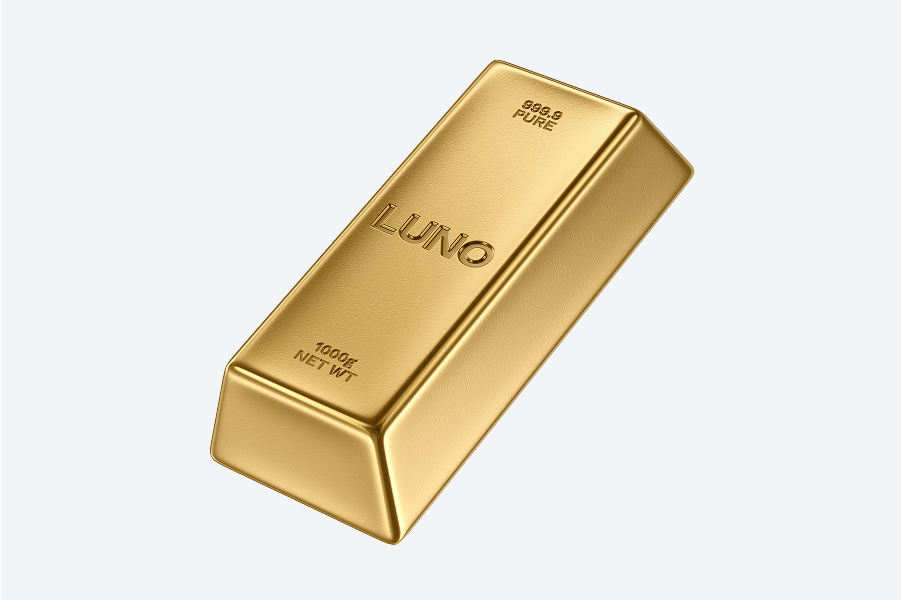
A growing trend in the space is the tokenisation of Real-World Assets (RWAs), where physical assets like gold, real estate, stocks and bonds are represented as tokens on a decentralised ledger, such as a blockchain. This development brings traditional finance closer to the world of decentralised finance (DeFi), offering new opportunities for investors and the institutions that offer these investments.
What are real-world assets (RWAs)?
Real-world assets refer to tangible or financial assets that are represented as tokens on a decentralised ledger. These assets can include:
- Precious metals – Gold and silver-backed cryptocurrencies allow investors to hold digital versions of these commodities.
- Real estate – Property ownership can be fractionalised into tokens, making it easier to buy and sell shares of real estate.
- Stocks and bonds – Traditional financial instruments can be tokenised, allowing for greater accessibility and efficiency.
By bringing these assets on-chain, tokenisation increases liquidity, transparency, and accessibility in traditional markets.
How does tokenisation work?
The process of tokenising real-world assets involves:
- Backing the asset – A physical or financial asset is secured and linked to a digital token.
- Issuing tokens – Tokens are created to represent one-to-one or fractional ownership of the asset.
- Trading & transfers – These tokens can be traded through crypto exchanges that support tokenised assets.
This structure allows for fractional ownership, meaning investors can purchase smaller portions of high-value assets, such as real estate or gold, without needing large amounts of capital.
Why are real-world assets gaining popularity?
Several factors are driving interest in real-world assets on the blockchain:
- Increased accessibility – Investors can gain exposure to assets that were previously out of reach due to high capital requirements.
- Enhanced liquidity – Tokenised assets can be traded more easily than traditional investments, removing barriers like long settlement times.
- Transparency & security – A blockchain or other decentralised ledger technology provides an immutable record of ownership, reducing fraud and increasing trust in transactions.
The real-world asset market continues to grow, recently surpassing $14 billion in total market capitalisation as of December 2024 – a 66% increase from the start of the year. This highlights the increasing adoption of tokenised assets and their potential to transform traditional finance.
Examples of real-world tokenisation
- Gold-backed crypto – Some projects allow users to hold digital tokens pegged to real gold reserves, providing an alternative way to invest in precious metals.
- Capital raises – Tokenisation allows startups to raise money by offering digital tokens that represent shares in the business. Investors can buy these tokens, giving them a stake in the company.
- Tokenised real estate – Companies are creating blockchain-based property investment opportunities where investors can buy fractional shares in real estate.
Stock-backed tokens – Some platforms offer tokenised versions of traditional stocks and bonds, enabling investors to trade them 24/7 on decentralised exchanges.
*Investing in cryptocurrency may result in the loss of capital. This information should not be construed as a solicitation to trade. All opinions, news, research, analysis, prices or other information is provided as general market commentary for information purposes only and is not investment advice or recommendation.
Did you find this useful?