
 Home
Home Sign in
 Bitcoin price
 Ethereum price
 Cardano price
 Chainlink price
 Solana price
 Uniswap price
 Avalanche price
 Wallet
 Fees
Fees Exchange
 Business
 Luno API
 Discover
 Help Centre
 Status
 Company
 Careers
 Press
Press


What the Ethereum “Pectra” upgrade means for investors
 Team Luno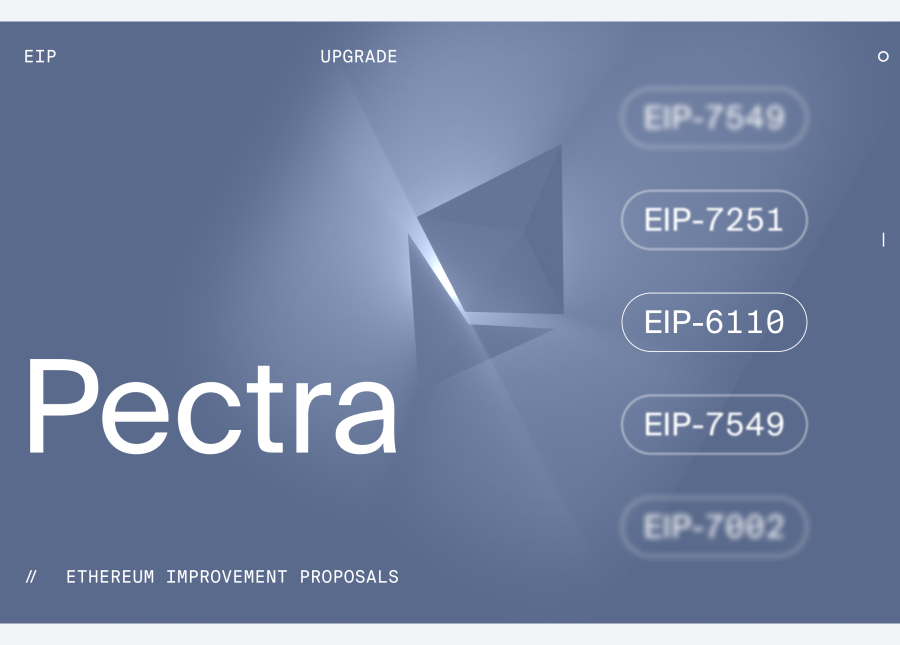
The Pectra upgrade is expected to be rolled out on Wednesday 7 May. The upgrade is a set of technical improvements that aims to make Ethereum faster, cheaper, and easier to use, especially for those building on it.
It follows the successful Dencun upgrade from March 2024. This upgrade introduced a feature called proto-danksharding (EIP-4844), which changed the way Ethereum processes data. Instead of storing everything permanently on-chain, it allows Layer 2s to store large chunks of data in “blobs” that are cheaper and only kept for a short time. Pectra is the next step in this evolution.
For the ETH geeks
Ethereum uses a two-part system where the Execution Layer handles smart contracts and transactions while the Consensus Layer secures the network through proof-of-stake validation. The Merge upgrade in 2022 connected the original Ethereum chain, the Execution Layer, with the Beacon Chain, the Consensus Layer, allowing them to work together while maintaining distinct functions.
The name “Pectra” is a blend of two upcoming Ethereum upgrade code names:
- Prague – refers to changes in the Execution Layer
- Electra – refers to changes in the Consensus Layer
By merging Prague and Electra, you get Pectra. This is similar to earlier upgrades like “Dencun” combined Deneb (Consensus) and Cancun (Execution).
What’s actually changing?
Here are the key changes coming in Pectra.
Fewer validators, less noise: Right now, anyone staking Ethereum becomes a validator by locking up 32 ETH. But the system ends up with a huge number of validators. With EIP-7251, larger holders can stake more (up to 2,048 ETH), simplifying operations and lowering network “chatter.”
Smarter wallets: The EIP-3074 will let Ethereum wallets behave more like a smart contract. That means it could one day pay your gas fees for you or let you batch multiple actions into one. It’s a step toward making Ethereum easier for everyone to use.
Better bridges and staking tools: Ethereum’s different layers, where apps run and where the system agrees on the truth, don’t talk to each other easily. A fix called EIP-4788 helps link them, improving tools like liquid staking and cross-chain apps.
Should you care?
While the average investor won’t notice these changes directly, the upgrades will make Ethereum cheaper, faster, and more secure behind the scenes for people actually using the network. It also lays the groundwork for features like Verkle trees, which will shrink the size of Ethereum data, and better tools for developers.
And as Ethereum gets more efficient, more apps and users can move in, supporting Ethereum’s long-term value.
Will this impact the way I stake Ethereum on Luno?
No, but it’s a good question. Our staking service providers pool ETH behind the scenes to run multiple 32-ETH validators.
With EIP-7251, they’ll be able to consolidate validators, meaning they can run one validator with 1,000 ETH instead of many individual ones. This could eventually lead to lower operational costs and more efficient staking.
The bottom line
Pectra isn’t expected to make headlines like “The Merge” did, but it’s just as important for Ethereum’s future. If you’re an investor, it’s a reminder that Ethereum’s developers are still shipping and scaling, and that’s good news for long-term believers.
*Investing in cryptocurrency may result in the loss of capital. This information should not be construed as a solicitation to trade. All opinions, news, research, analysis, prices or other information is provided as general market commentary for information purposes only and is not investment advice or recommendation. Luno always advises you to obtain your own independent financial advice before investing or trading in cryptocurrency.
Did you find this useful?