
 Home
Home Sign in
 Bitcoin price
 Ethereum price
 Cardano price
 Chainlink price
 Solana price
 Uniswap price
 Avalanche price
 Wallet
 Fees
Fees Exchange
 Business
 Luno API
 Discover
 Help Centre
 Status
 Company
 Careers
 Press
Press


Is Zcash gunning for Bitcoin and Ethereum?
 Team Luno
Probably Nothing by Luno

THE WEEK IN MARKETS
Bitcoin never made it past the final boss of technical analysis. The 200-day moving average, sitting around $83K, held firm. Just as the market was working itself up, a shaky Iran ceasefire and a US inflation reading that refuses to fully disappear reminded everyone, the Fed especially, that things are not quite under control yet.
From the Fed’s own minutes: “A majority of participants highlighted that some policy firming would likely become appropriate if inflation were to continue to run persistently above 2 percent.”
The numbers reflect that. Bitcoin has sat around $77.5K, up a modest 0.9% on the week. Not a collapse, not a breakout.
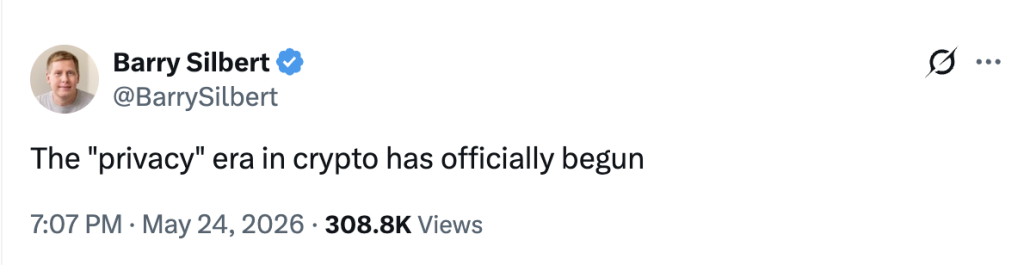
Privacy is having a moment. ZCash is up roughly 87% over the month and 28% over the past seven days, a sign that the privacy narrative in crypto is back in the conversation, even if it rarely makes the headlines.
On the equities side, US stocks ended the week in positive territory. The Dow hit fresh highs and the S&P 500 extended its winning streak to eight consecutive weeks, finishing up 9.2% for the year. AI enthusiasm and large-cap growth continued to carry sentiment, with small caps showing some relative strength alongside.
Big tech earnings shaped the mood, once again confirming how much the market leans on a handful of names. Nvidia beat expectations, again, but the response was muted. It seems that at some point, beating the number stops being a catalyst if you’re always one-upping expectations.
WHAT’S UP 🔥: Zcash (ZEC) | +27.5% | 7 days
WHAT’S DOWN 💧: SPDR Gold ETF | 0.8% | 7 days
Make your move on Zcash 🔎 HERE.
And if you’re leaning into the safe-haven narrative at this point, you can easily get exposure to gold through Tether Gold 💰HERE.
Data correct as at 25 May 2026, 12h10 GMT.
THE BIG READ
Pull up a chair, the new Fed chief is in town
The new Chair of the Federal Reserve Bank in the US, Kevin Warsh, was sworn in at the White House last week. The Trump nominee succeeds Jerome Powell, who, you could say, was very much not enjoying support from the US President.
Markets are asking whether the Fed under Warsh’s lead will be able to practice its mandate of balancing inflation against employment without buckling under pressure from the White House.
Warsh already has to navigate a complicated environment, with President Trump on the one side, and Powell on the other, who says he’ll stick around on the Fed’s board for the remainder of his serving time until January 2028. The implication being that by occupying his governor seat, Powell prevents the president from appointing an immediate replacement, thereby denying the administration an automatic majority on the seven-member board.
Inflation data shows that inflation is moving further above the Fed’s 2% target. The widening gap between pay and prices is another behemoth Warsh is faced with.
The latest US annual inflation rate climbed to 3.8% in April 2026. This increase breaks the Federal Reserve’s recent cooling trend and moves the headline number further away from its 2% target, even though core inflation (excluding food and energy) remains somewhat anchored at 2.8%. Does this reheating trend imply that the Federal Reserve will delay any anticipated interest rate cuts? Markets think so.Initially, Trump made it clear he expected Warsh to deliver near-term rate cuts. However, his tone has since softened. In an interview with Fortune, Trump indicated he may need to wait until the Iran conflict is resolved before cuts become realistic. “You can’t really look at the figures until the war is over,” he said. Trump also spoke to the Washington Examiner, and noted Warsh’s approach to interest rates: “I’m going to let him do what he wants to do. He’s a very talented guy, he’s going to be fine, he’s going to do a good job.”
PICTURE THIS
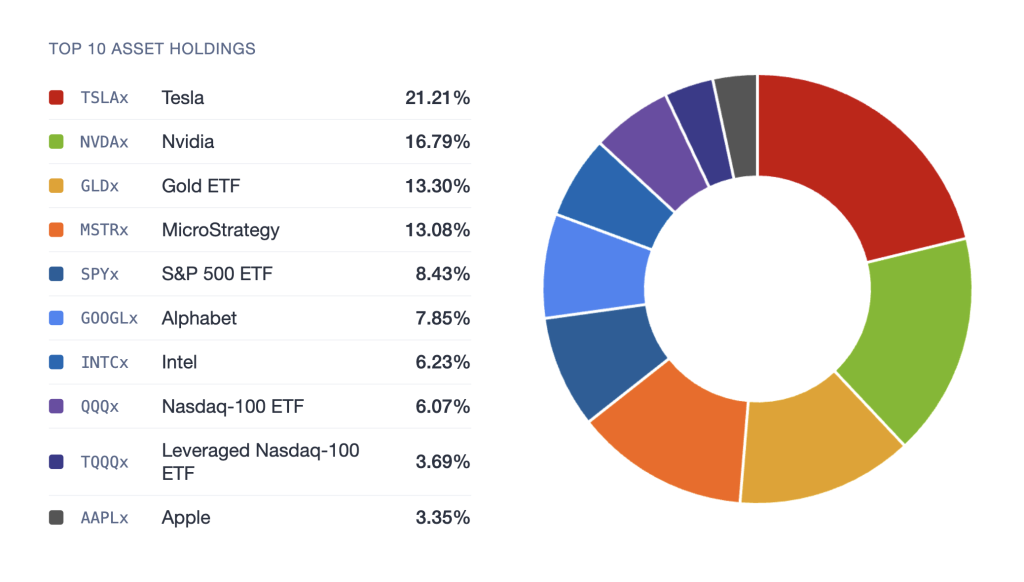
Source: Internal Luno data
What are investors buying on Luno?
Tesla and Nvidia together make up 38% of the portfolio, which tells you something about where retail investors in South Africa and Nigeria have their eyes fixed: AI, high-growth tech, and the kind of stocks that move hard when sentiment shifts. MicroStrategy sits fourth at just over 13%, and that’s not a coincidence, it’s effectively a Bitcoin bet in stock form, which suggests plenty of users are finding creative ways to double down on crypto.
What’s interesting is the balance sitting underneath. Gold (GLDx) makes up 13.30% of the portfolio, edging out broad index trackers like the S&P 500. For investors dealing with Rand and Naira volatility day to day, that’s less surprising than it might look from the outside. When you see Intel ranking ahead of Apple, it could also be a signal that these investors aren’t just buying household names.
*Tokenised stocks are only available to customers in South Africa and Nigeria.
QUICK TAKES
🚀 Elon’s other rocket has $1.45 billion in Bitcoin
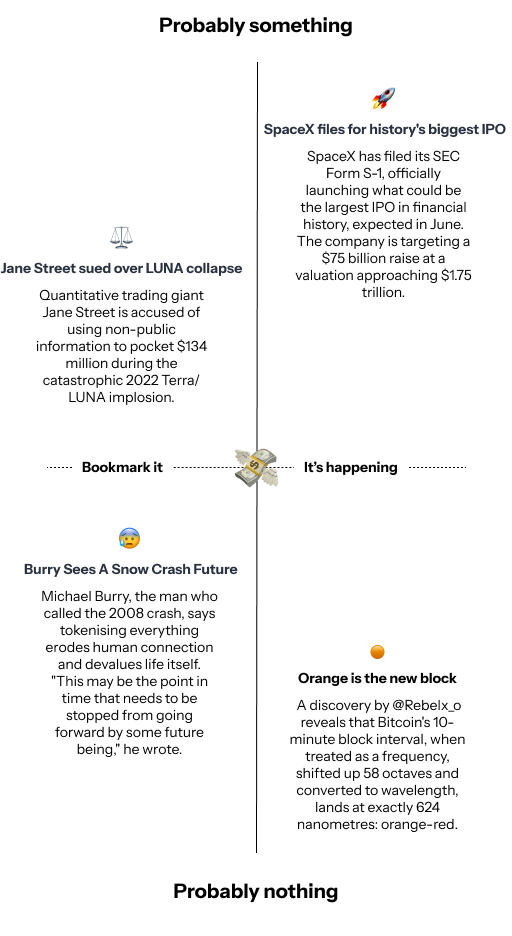
SpaceX’s long-awaited IPO filing dropped last week, and buried in the balance sheet was a detail the market didn’t miss. Musk’s aerospace company holds 18,712 Bitcoin, currently valued at $1.45 billion, making it one of the top ten largest corporate Bitcoin holders on the planet. The position has sat unchanged since the end of 2024, through a $112 million paper loss last year and a $955 million paper gain the year before. SpaceX bought in during the pandemic-era crypto boom and, unlike Tesla, hasn’t trimmed. The filing makes no mention of Dogecoin. – Read more
🔧 Ethereum is downsizing, Vitalik says that’s the point
Eight senior Ethereum Foundation researchers have left in 2026, five of them in May alone. The exits follow a deliberate restructuring Vitalik Buterin initiated in 2025, with a new mandate that repositions the Foundation as one steward among many rather than the central authority. Buterin addressed the turbulence directly this week, saying his own influence within the organisation will continue to shrink — “which is honestly what I want.” The Foundation is narrowing its focus to censorship-resistance, privacy, and open infrastructure, and plans to sell less ETH going forward. Whether this reads as a leaner, smarter organisation or a brain drain in progress depends on who you ask. – Read more
🕵️ Is Zcash gunning for Bitcoin and Ethereum?
Zcash has the same hard cap as Bitcoin, 21 million coins, but its upcoming roadmap could make it disruptive if successful. Three upgrades in development, private smart contracts, proof-of-stake via the Crosslink upgrade, and Zcash Shielded Assets for stablecoins and tokenised products, would give it capabilities that neither Bitcoin nor Ethereum currently offers together. Its market cap is around $11 billion today versus Bitcoin’s $1.5 trillion. The execution risk is real, and the timeline stretches years, but it’s worth keeping an eye on. Judging by the recent rally, investors are doing just that. – Read more
TOWN HALL
Source: https://x.com/BarrySilbert/status/2058595857344208928
FROM THE FLOOR
3 ways prediction markets are changing how people engage with crypto
By Ayotunde Alabi, CEO of Luno Nigeria
What started as a niche online activity has steadily evolved into a broader digital ecosystem where participation is driven by real-time sentiment, collective opinion, and people’s desire to act on what they believe will happen next.
Crypto markets already move at the speed of speculation, reaction, and online sentiment. Every day, millions of users follow Bitcoin and other digital assets closely, responding to price swings, macroeconomic developments, policy announcements, and shifting narratives in real time. In highly active crypto markets those conversations have become deeply embedded in online culture, with users constantly discussing where prices may move next.
What is now changing is how people act on those views.
Here are three ways prediction markets are beginning to reshape how users engage with crypto.
1. Turning market watchers into market participants
Crypto has always been highly social and deeply participatory, even beyond trading itself. Users constantly track price charts, react to breaking news, debate market direction online, and form opinions about where assets may move next. But, historically, acting on those views often required directly buying, holding, or trading the asset itself.
Prediction markets are beginning to change that dynamic.
Instead of taking open-ended exposure to an asset, users can participate in defined market outcomes tied to specific timeframes and price conditions. The focus shifts from simply owning an asset to engaging more directly with market conviction itself.
That may seem like a subtle evolution, but it reflects a much broader behavioural shift within crypto participation.
People who previously only observed market movements or discussed them socially can now participate in those views through structured market activity. In many ways, prediction markets are transforming crypto engagement from passive observation into more active participation.
2. Bringing structure to crypto speculation
Crypto markets have always been heavily influenced by sentiment, speculation, and fast-moving narratives. Prediction markets introduce a more structured framework around that behaviour.
Rather than broad or informal speculation, users engage with clearly defined market conditions tied to fixed timeframes and transparent outcomes. Questions become more precise, participation becomes more measurable, and outcomes become easier to compare over time.
That structure changes the nature of engagement itself.
Instead of speculation existing purely as conversation, prediction markets create systems where market conviction is expressed within clearer parameters. Users are encouraged to think more intentionally about timing, probability, volatility, and market behaviour rather than reacting impulsively to noise or momentum alone.
As the category evolves, participation safeguards and transparent market rules will also become increasingly important. Clear disclosures, responsible participation frameworks, and user protections are likely to emerge as standard expectations across the industry as platforms continue experimenting with these products.
3. Crypto engagement is becoming more interactive
The rise of prediction markets also reflects a larger shift happening across crypto platforms globally.
Exchanges today are increasingly moving beyond simple buy-and-sell functionality toward more engagement-driven experiences. Over the past few years, the industry has seen the growth of staking, rewards, educational content, social trading features, and other participation-led products designed to keep users more actively connected to crypto ecosystems.
Prediction markets fit naturally into that evolution. They create shorter and more immediate feedback loops between market events and user participation. A major economic announcement, price movement, or policy development can quickly translate into structured market activity within hours rather than days.
At the same time, the growth of these products is also increasing the importance of education across the industry. As participation models become more sophisticated, users will need a stronger understanding of market mechanics, volatility, time horizons, and risk exposure to engage responsibly.
Prediction markets are still an emerging category within crypto, but they point toward something bigger taking shape across the industry. Crypto users are no longer only buying and holding digital assets, but are participating in markets, expressing conviction in real time, and engaging with price movements in more interactive ways than before.
* Prediction markets are only available to Luno customers in South Africa and Nigeria. **This column is for informational purposes only and does not constitute financial, legal or investment advice.
*Investing in cryptocurrency may result in the loss of capital. This information should not be construed as a solicitation to trade. All opinions, news, research, analysis, prices or other information is provided as general market commentary for information purposes only and is not investment advice or recommendation. Luno always advises you to obtain your own independent financial advice before investing or trading in cryptocurrency.
Did you find this useful?